Grounded in Purpose: Urban Ocean Lab’s Managing Director Daphne Lundi on Resilient Communities, Creativity, and Collective Action
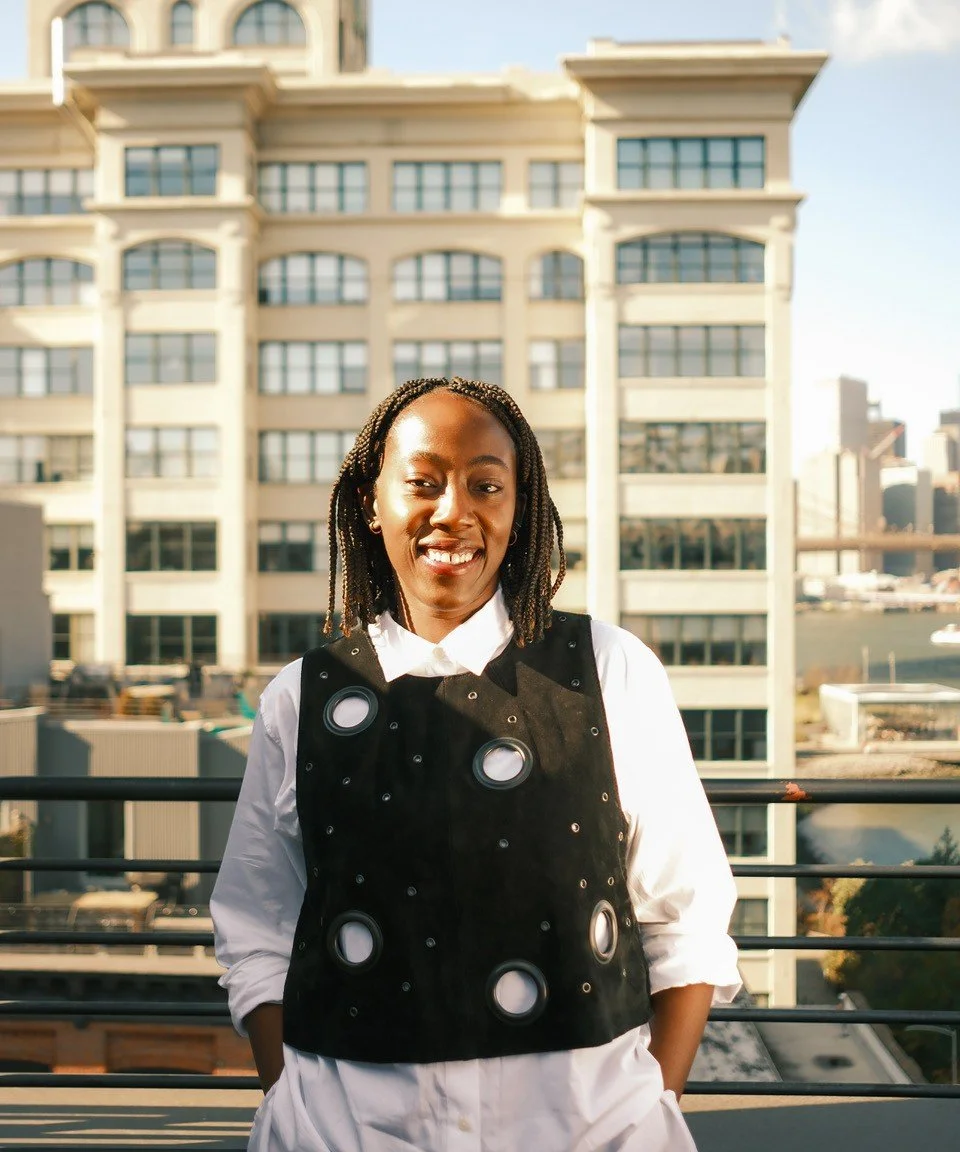
Daphne Lundi by For Everyday Life.
By Julia Gamolina
Daphne Lundi's work is shaped by the intersections of people, cities, and the environment. She is the Managing Director of Urban Ocean Lab, a national climate policy think tank focused on climate resilience in coastal cities. She previously held roles in local and federal government including serving as a Deputy Director of the NYC Mayor's Office of Climate and Environmental Justice and working as a planner at the NYC Department of City Planning and FEMA. She has taught urban planning courses and design studios at Hunter College, The City College of New York, and Columbia GSAPP.
JG: You’ve been the Managing Director of Urban Ocean Lab, a think tank I admire so much, for almost a year. What are your priorities for your role and for the institution this year, and what should we all be paying most attention to in terms of climate right now?
DL: Supporting climate policy implementation in coastal communities and being most impactful under the current federal landscape are my priorities this year. On the macro level, the rollback of federal programs that were making real progress on air quality, energy affordability, and cumulative environmental burdens in frontline communities has been staggering. These weren't abstract policy wins; they were lifelines for communities that have long carried a disproportionate share of environmental harm. We're also seeing rollbacks in the clean energy sector; offshore wind projects have been put on hold, creating real uncertainty for coastal states that had built significant momentum. At the same time, we're seeing explosive growth in data center development, which is driving up energy demand and energy costs for communities while putting additional pressure on grids and on freshwater resources.
On the micro level, you have communities now dealing with gaps in funding, climate data, and capacity to implement projects. We're watching this play out in real time with the FEMA BRIC program. With our focus on coastal areas, we're also keeping a close eye on the complex multi-hazard challenges that coastal cities are navigating. Communities are dealing with coastal flooding and sea level rise while simultaneously contending with extreme heat and wildfire events that are growing longer and more intense. Add in housing affordability pressures, aging infrastructure, and the rollback of federal environmental protections, and you start to understand why this moment feels so critical.
Our work right now is about supporting local implementation, building coalitions to sustain momentum on existing programs, and making sure the multi-hazard reality that coastal and frontline communities are living is fully visible in the policy conversations that will shape what comes next. But we’re also hearing inspiring stories from communities that are continuing to invest in creative, effective climate adaptation solutions through innovative partnerships – our recent memo on Partnerships as Resilient Infrastructure shares some of these success stories.
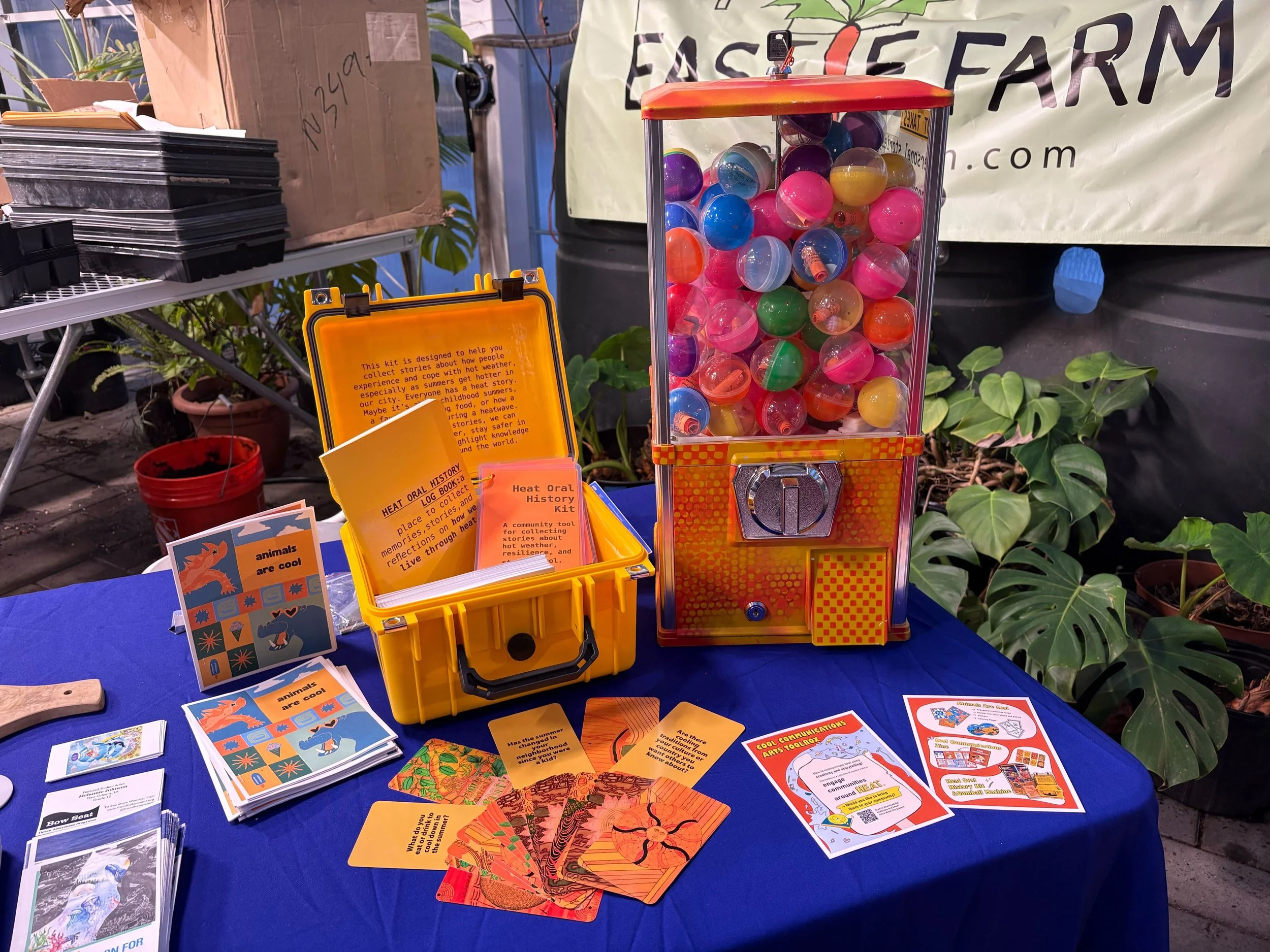
Heat Oral History Kit and Hot Takes. Heat Oral History Kit: heat-inspired tarot deck and oral history guide for collecting stories about living with heat. Hot Takes: gumball machine filled with excerpts from poems about extreme heat. Both created for the Metropolitan Area Planning Council (MAPC). Photo from a Community Climate Stories event, East Boston. Photography by Massachusetts Office of Climate Innovation and Resilience.
Now let's go back a little bit — you first studied sociology and then developed your focus on environmental and natural resource planning, for which you got your MS. What were you hoping to do in the world, and how did the focus on the environment come about from your sociology studies?
Sociology was actually my entry point into urban planning. As a sociology major, I found myself gravitating toward classes and researchers who explored the material conditions of people in cities. I was especially drawn to Du Bois and other Black scholars exploring Black life in urban spaces, and to fiction that explored that experience – Ann Petry's The Street, Paule Marshall's Brown Girl,Brownstones, to name a few. My sociology advisor was the one who planted the seed of urban planning as a potential profession to explore. That led me to an internship at the NYC Department of City Planning, which eventually led to applying for graduate school in urban planning.
The backdrop of my college experience was also the earthquake in Haiti in 2010. As a Haitian American and a New Yorker, I — along with many of my family and neighbors — were reeling from the grief and magnitude of that event. It's what led me to focus my planning work on environmental planning and to look for opportunities to study and work in a Caribbean context. I worked as a pro-bono environmental planner for several years with Pinchina Consulting on a rehabilitation project in Petit-Goâve, Haiti. Hurricane Sandy was another event that shaped the trajectory of my work. It's what led me to FEMA, where I worked on community recovery plans on Long Island, and eventually back to the NYC Department of City Planning as a flood resilience planner in Brooklyn.
“When the work is connected to something real, the setbacks feel less like personal failures and more like information. They tell you where the system needs pressure, where the coalition needs to be stronger, and where you need to come back and try again differently.”
What was some of the best advice you got early on that has informed your approach to your work and career?
Stay open to trying new things and exploring new sectors. Graduating and entering the job market a few years around the 2008 recession forced me to approach my early career with a level of openness I'm now grateful for. Life and careers have a way of surprising you. Many of my early jobs post-grad school were temporary contracts positions that ended up opening up longer-term opportunities.
Also to find your people and build community intentionally. When I moved back to NYC after grad school, I had to work to build my professional network. A lot of my colleagues had gone to grad schools in the Northeast that served as informal feeders for planning jobs in New York, so they had existing relationships I didn't. That's part of what led me to join the Diversity Committee (DivComm) for the New York Metro Chapter of the American Planning Association, where I served as vice chair and where I first got to do youth engagement work. It's also what led me to help build community with other Black urban planners and architects in what would eventually become BlackSpace. Community also has a way of opening doors you didn't even know existed.
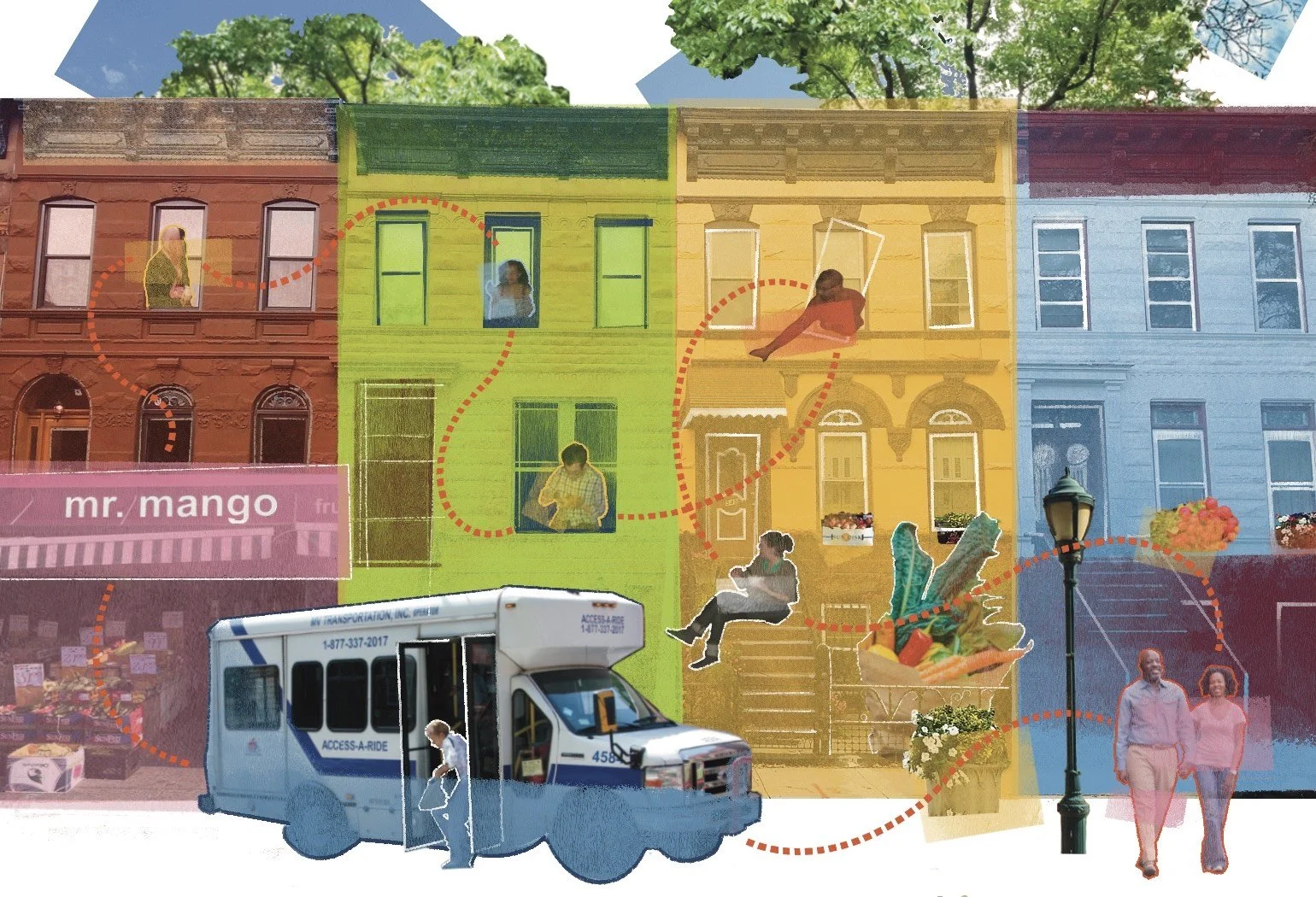
Romantic Urbanism. Illustration by David Hong.
Before joining Urban Ocean Lab, you worked in the Mayor's Office and for FEMA. What did you learn with your professional experiences in the public sector?
The vast majority of my career has been in government, which has been an education in and of itself. Part of what drew me to the public sector was a deep belief in being in service — as Shirley Chisholm said, "Service is the rent we pay for the privilege of living on this earth." Growing up with a single mom in New York, I was on the receiving end of many services that shaped who I am today. I spent a lot of time at my local library after school while my mom was still at work. I went to summer camp at CAMBA, where my mom also took English and computer classes. My free student MetroCard that let me move around the city with a sense of independence and agency. I am who I am in part because I grew up in a city that had free and affordable resources that my family could access.
Working in government helped me understand the machinations of bureaucracy and what it actually takes to move something from an idea to a project and ultimately to a policy that improves people's lives. In turn, I've used that knowledge to try to demystify these systems for people. Whether it's Flood Insurance Rate Maps, heat vulnerability indices, or zoning regulations – all of these are things that shape people's lives – you shouldn't need a master's degree to understand them or to advocate for change.
You then went off on your own and consulted. Tell me about this.
When I left city government, part of what I was looking for was the freedom to be more interdisciplinary. Government work, as rewarding as it is, can sometimes keep you in a lane. Going out on my own gave me room to think across fields, to bring together policy, design, and community engagement in ways that felt more fluid. This is also where my creative practice became less of a separate thing and more of an integrated one with how I think about policy and urbanism more broadly. In the past five or so years, it felt even more important to pour into that side of myself and make space to learn from other creative people, in the same way I've always learned from planners and designers.
One project that really crystallized that for me was working with the Metropolitan Area Planning Council and organizations in the Lower Mystic region of Massachusetts on a communications initiative around extreme heat. I designed a heat oral history kit, a tarot-inspired deck of conversation-starting cards paired with an oral history guidebook, as part of a broader storytelling and multimedia effort called the Cool Communications Network. The project explored both the social and physical dimensions of heat and the potential knowledge exchanges that can happen between community members who have immigrated from hotter climates and residents in the Northeast who are navigating increasingly warmer summers.
“Your lived experience is not a liability in this work, it’s a form of expertise. Claim it.”
Looking back at it all, what have been the biggest challenges? How did you manage through perceived disappointments or setbacks?
Urban planning and climate policy work is longitudinal, and change takes time. There have been moments where I've pushed hard for something and hit a wall, whether because of bureaucratic constraints, shifting priorities, or resources that simply weren't there. What has helped me move through those moments is being grounded in purpose. When the work is connected to something real, the setbacks feel less like personal failures and more like information. They tell you where the system needs pressure, where the coalition needs to be stronger, and where you need to come back and try again differently.
Who were your teachers and mentors through it all?
My peers. I forget where I first heard the term "peero" — peer-hero — but it's always resonated with me. One of the best things about working in the same city and region for so long has been bearing witness to the growth and evolution of people I've come up with professionally, like Tiffany-Ann Taylor who’s an incredible transportation policy leader, or Kenyatta McClean and Emma Osore who took BlackSpace from an informal collective to a non-profit organization. Quadrean Lewis at Youth Design Center, Dr. Vanessa Dean, and Dan McPhee, to name just a few, have shaped how I approach my work as a practitioner.
Getting to work alongside urban designers at the NYC Department of City Planning shaped a lot of my design sensibilities as an urban planner and was such a critical education as someone who cares about public space and quality design. When I was a flood resiliency planner, working with Eugenia Di Girolamo was an education in itself. I learned a lot about the regulatory and design hurdles of climate-resilient construction from her, a perspective that still informs how I approach my work today.
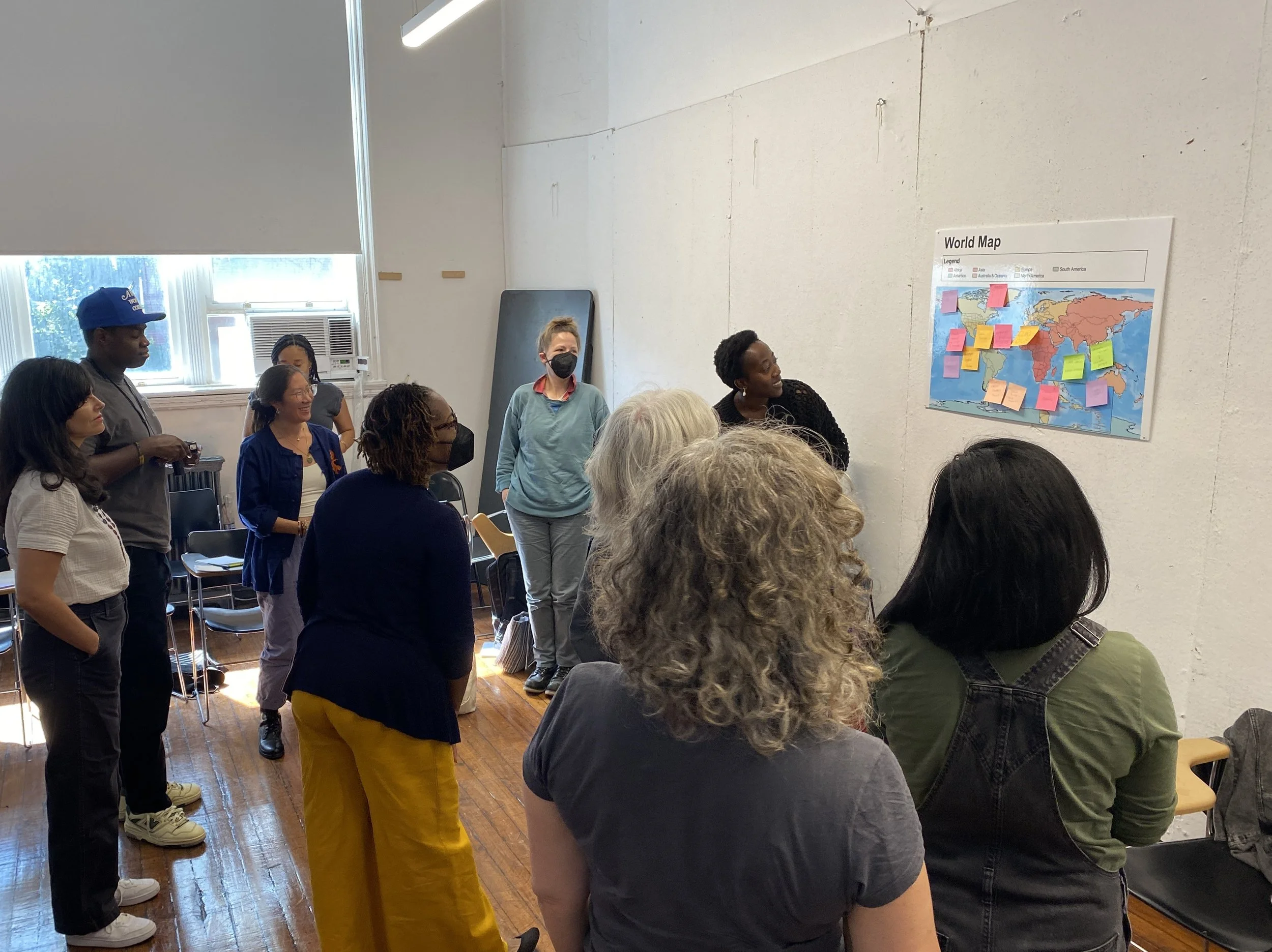
Disasters and Diasporas. Workshop at the 2024 Creative Time Summit exploring the parallels between climate risk in the Caribbean and climate risks faced by the Caribbean diaspora in New York City. Photo by Parker Calvert.
Who are you admiring now and why?
Vanessa Morrison, who I got to know through BlackSpace, is the CEO and co-founder of Open Design Collective — Oklahoma's first and only Black and women-led nonprofit design firm. Right now she's working with community leaders in Oklahoma City on the renovation of the historic Jewel Theater, which was a hub of Oklahoma City's Black community when it was built in the 1930s and is now the only surviving historic Black theater in the city.
I'm also deeply inspired by Dr. Andrea Roberts, whom I got to know during my time at UT Austin. Through the Texas Freedom Colonies Project, she has mapped and documented over five-hundred Black settlements across the state through participatory heritage conservation and community storytelling. She’s also expanding that work to other states and countries that have histories of Black towns and settlements.
And then there's Louise Yeung, one of my dearest friends and one of the smartest, most thoughtful people working in climate policy today. Louise was recently appointed NYC's Chief Climate Officer under Mayor Mamdani. I'm really excited to see how she shapes NYC’s climate justice agenda in the years ahead.
What is the impact you'd like to have on the world? What is your core mission? And what does success look like to you?
Success looks like more resilient communities where both historic and current environmental injustices have been addressed and where people have the tools to meet the impacts of climate change. The communities most exposed to climate risk are often the same ones that have been systematically under-resourced and overlooked. That's not a coincidence, and addressing it has to be intentional.
But none of that happens alone. Success for me is also about collective action, the right coalitions coming together, and making sure that more young people know they can play a role in shaping the future of their communities.
Finally, success also looks like staying connected to my own creativity and joy through it all. The work is long. Tending to yourself and tending to your community are the same act, you can't sustain one without the other.
Finally, what advice do you have for those starting their careers? Would your advice be any different for women?
Follow your curiosities, even if you can't always pursue them through your primary role. Looking back over the past fifteen years, I feel like I've grown equally, if not more, from experiences outside of my professional titles as I have from within them, whether through volunteer work, side projects, or simply following something that sparked my interest. Also read widely and speculatively. I've found a lot of inspiration in science fiction and speculative fiction about different kinds of futures. That imaginative muscle matters in terms of climate action.
For women, and especially for Women of Color, I'd add that the rooms will not always be built for you. You have to build your own spaces, find your co-conspirators, and create ways to be in community with people who see the full scope of who you are. Your lived experience is not a liability in this work, it's a form of expertise. Claim it.
This interview has been edited and condensed for clarity.